五、(2024·镇江市丹阳期中)任务型阅读。
With the development of technology, our city life is becoming smarter and smarter. The idea of smart cities makes people live a better life. Here are some examples.
Smart campuses(校园)
In China, many campuses have turned from using "old-school" multimedia(多媒体的) tools to AI and big data(数据). Students in smart campuses can use VR glasses to learn about what's inside a rocket and how it is launched(发射). In swimming classes, by wearing smart earphones, children can get real-time instructions from the coach under the water. This makes training safer.
They can also enjoy meals made by smart canteens. They can choose meals according to their needs on the internet. It helps the school plan and prepare meals, cutting down on food and kitchen waste.
Smart homes
More and more people would like to live in smart homes. If you're not at home, many worries may come into your mind. With a smart home, all these worries will be gone. What's more, users can use an app to control different smart home devices(设备) easily. You can turn on the air conditioner 30 minutes before getting home. Moreover, the app can record what happens inside your home.
Smart transportation
Smart transportation is developing fast. That's why many companies have made some smart apps.
Just download them to your smartphones, and tell the app the places of your departure(出发) and destination(终点). Then, a driverless car will go to you. A computer takes full control of the drive. A screen on the back seats shows people the information of the ride and how the car looks around to see other cars, bikes, and anything else that might get in its way.
解析:
【分析】
首先通读全文,明确文章从智慧校园、智慧家居、智慧交通三个维度介绍智慧城市技术对人们生活的积极影响。解题时先对应表格的三个板块,逐一在原文中定位对应描述,再结合空格前后的语法规则、固定搭配确定单词的正确形式,注意时态、主谓一致、非谓语、比较级等语法要求,同时保证语义和原文完全匹配。
【解析】
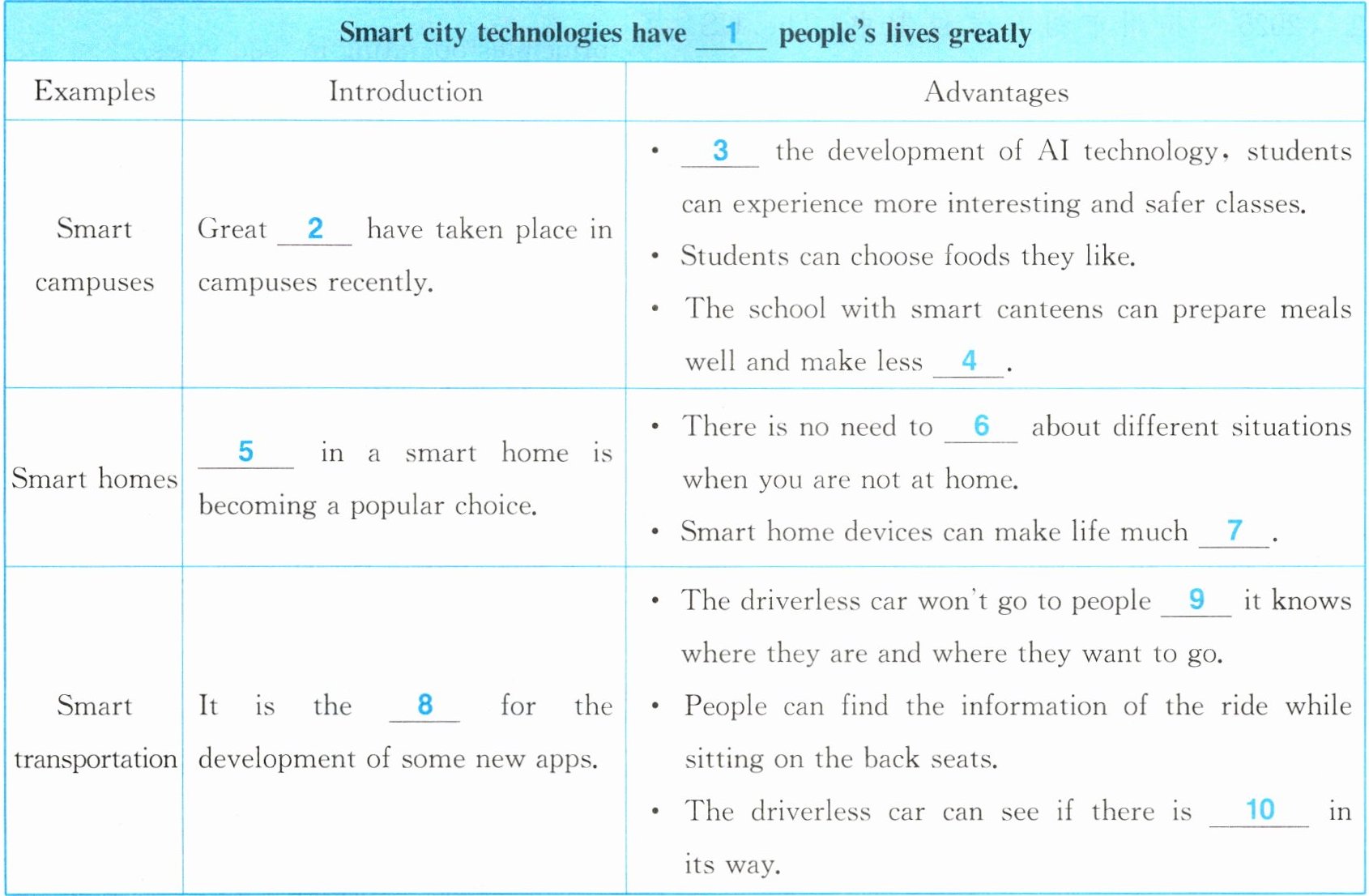
1. 由原文第一段“The idea of smart cities makes people live a better life”可知智慧城市技术极大改善了人们的生活,空前有助动词have,为现在完成时结构,因此填improve的过去分词improved。
2. 智慧校园板块介绍校园从传统多媒体工具转向AI、大数据,发生了诸多变化,空后谓语是have taken place,说明主语为复数,因此填changes,表“变化”。
3. 此处为固定搭配with the development of...,意为“随着……的发展”,句首首字母需大写,因此填With。
4. 由智慧校园板块最后一句“cutting down on food and kitchen waste”可知智慧食堂可以减少浪费,less后接不可数名词waste,因此填waste。
5. 本句缺少主语,表达“住在智能家居中”的含义,需要用动名词作主语,句首首字母大写,因此填Living。
6. 由智慧家居板块“If you're not at home, many worries may come into your mind. With a smart home, all these worries will be gone”可知有了智能家居就无需担心不在家时的各类状况,固定搭配worry about意为“担心”,need to后接动词原形,因此填worry。
7. 智能家居可以远程控制家电等,让生活便捷很多,much后接形容词比较级,因此填easier。
8. 由智慧交通板块“Smart transportation is developing fast. That's why many companies have made some smart apps”可知智慧交通是各类新应用开发的原因,固定搭配the reason for...意为“……的原因”,因此填reason。
9. 句意:无人驾驶车不会驶向用户,除非它知道用户的位置和目的地,此处引导条件状语从句,表“除非”的含义,填unless。
10. 由原文“see other cars, bikes, and anything else that might get in its way”可知无人驾驶车可以侦测到前路是否有障碍物,即路上有没有什么东西挡路,因此填something。
【答案】
1. improved 2. changes 3. With 4. waste 5. Living 6. worry 7. easier 8. reason 9. unless 10. something
【知识点】
任务型阅读,固定搭配,词形转换
【点评】
本题以智慧城市热点话题为载体,考查学生快速定位文本信息、结合语法规则转换单词形式的能力,多数空格可直接通过原文定位得出答案,少量空格需要结合语义和语法进行适当变形,整体兼顾基础和灵活度,适合巩固阅读信息提取能力。
【难度系数】
0.7