二、完形填空。(共10小题;每小题1分,满分10分)
阅读短文,从短文后各题所给的四个选项A、B、C和D中,选出可以填入空白处的最佳选项。
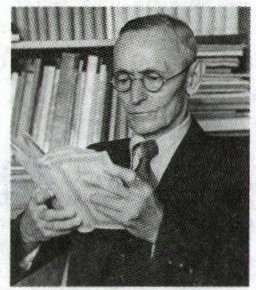
Hermann Hesse(1877—1962),a Swiss poet(诗人)and novelist,is celebrated as one of the greatest writers of the 20th century. Born in Germany,he had a
16
family background because his father was German while his mother was Swiss-French. Hesse grew up in different cultures and nations. This
17
special experiences to his life.
Hesse wanted to be a poet from 12 years old,though he didn’t do well at school. After leaving school,he felt a bit lost and tried different jobs. He worked as a mechanic’s apprentice(机械师学徒),then sold books in a bookshop and
18
began writing. People didn’t take notice of his works
19
1904,when his novel Peter Camenzind achieved a quick success. His novels combine(结合)Eastern and Western ideas,
20
many readers’ attention all over the world. Siddhartha(1922)has been translated into over 60 languages. Later works like Steppenwolf(1927)and The Glass Bead Game(1943)made him more famous.
Hesse’s works deeply influence the young. They are always among the top 20 most
21
books by German teenagers in public libraries—influential works for personal development. Demian(1919)has
22
one of the greatest books for self-discovery till now. As Hesse writes in his book,“Each man’s life represents a road towards himself. ” Like the main character in the novel,we all face moments of doubt in life,
23
they help us understand ourselves better. That’s the truth about personal growth.
Hesse’s works are important in worldwide
24
. Included in 68% of German literature courses,Hesse is the second most-taught German writer in American universities. His works are equally important in European schools.
Hesse was awarded the Nobel Prize in Literature in 1946 for his contributions to the
25
between cultures through literature. His special combination of Eastern and Western thoughts continues to encourage readers around the world.
(
A
)16. A. mixed B. simple C. broken D. practical
(
A
)17. A. added B. limited C. donated D. compared
(
B
)18. A. usually B. finally C. certainly D. suddenly
(
C
)19. A. in B. from C. until D. since
(
B
)20. A. losing B. catching C. attacking D. exploring
(
D
)21. A. sold B. written C. bought D. borrowed
(
D
)22. A. turned B. seemed C. followed D. remained
(
B
)23. A. so B. but C. after D. because
(
D
)24. A. art B. science C. language D. education
(
C
)25. A. idea B. purpose C. dialogue D. entertainment