B
① In 1903,the Wright brothers' historic flight opened the door to human aviation(航空). Since then,over the past century,humans have been reaching new heights in researching the skies. Today,a new chapter is unfolding in the skies—one led by drones that are changing how we live,work,and connect.
②As part of the "low-altitude economy(低空经济)",these flying machines have become a sign of technological progress(进步),fitting smoothly into both city and country life.
③Take the Badaling Great Wall in Beijing as an example,where drones have turned a 50-minute hike for food and water into a three-minute convenience. Travellers now order on the phone,and electric drones deliver(递送) snacks and drinks,even collecting garbage on their return trips. Besides,in cities like Shenzhen,known as the "City of Drones",technology goes further. In 2024,electric "air cars" that can take off and land upright started flying there. They don't need long runways,showing how technology can become part of daily life.
④ Drones are also changing farming. In Guangxi,over 250,000 drones help protect plants. They watch over crops,spray pesticides(杀虫剂),and find pests,working quickly across large fields. This technology has cut labour costs by 40% compared to traditional methods,allowing farmers to manage more land with less effort. During harvest seasons,drones even help watch over fruit growth,guiding farmers to pick at the best time for better quality and higher yields(产量).
⑤With such new technology,there are things to think about. As more drones fly,questions about safety,airspace rules,and personal information might come up. How can we make sure these machines fly safely with other planes? How do we balance the use of space and the protection of people's space? Even if high-tech BDS helps drones fly in the right way,rules must be developed to help use them without risks.
⑥From delivering snacks on the Great Wall to helping farms and cities,Chinese drones have gone from a new thing to a need. They show how creation can shorten the
gap between old and new,city and country. As we step into this low-altitude revolution(变革),one thing is clear:Tomorrow is not just about flying higher,but about flying smarter.
5. How does the writer start the passage?
A. By describing a future plan.
B. By talking about a historic event.
C. By raising a recent problem.
D. By showing the changes of technology.
6. What can we infer about the use of drones?
A. The "air cars" in Shenzhen will replace traditional cars in the future.
B. Farmers now need more workers to control drones in the fields.
C. Farmers can use drones to watch fruit growth and pick fruit directly.
D. Proper rules are the key to making drones more helpful.
7. Which "gap" below has the same meaning as the "gap" in the last paragraph?
A. The gap year before college helps students relax.
B. There's a gap in the wall—we can climb through it.
C. The culture gap often makes it hard to talk to foreigners.
D. The gap between the two buildings is used for a garden.
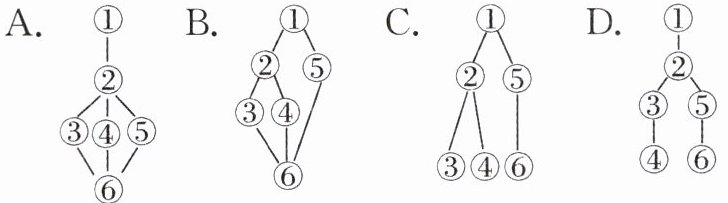
8. Which of the following shows the structure of this passage?