[2026 南通期末改编]At St. John's Church of England Primary School in
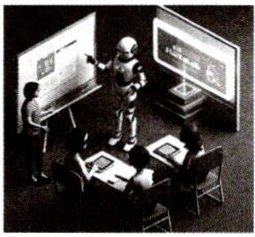
Wigan, Year 8 students were busy with a science class yesterday. When the science teacher was explaining the 1.
importance
( important ) of vitamins for body protection, some students were listening carefully and taking notes, while others 2.
were inventing
(invent) a simple AI quiz game about how our bodies work at that time. Each student used a tablet, following some easy lessons made by AI.
This school is one of the first to guide the use of AI in the classroom in history. The system analyzes(分析) each 3.
child's
(child) work and points out where they need to improve. With detailed reports from the AI, teachers can adjust (调整) their teaching methods 4.
to develop
(develop) a better learning plan for every student in time. Parents can check these plans and progress reports through the online system. In this way, both teachers and parents could 5.
easily
(easy) see how every student is doing in each subject.
For students, they can express their feelings about the lessons with an emoji button(表情按钮). If a boy clicked a frustrated(沮丧的) emoji, the AI could find it 6.
impossible
(possible) for him to follow, so it immediately adjusted the lesson.
With the new system, they can also learn by 7.
themselves
(they) anytime, anywhere instead of waiting for the teacher. Holly Graham, a Grade 8 student, said, "I used to give up when I 8.
met
(meet) hard math problems, but now I can try to work them out."
While you might think the children are glued to their screens all day, Laura James, the principal, explained that this was not true. The children still write in workbooks as 9.
carefully
(care) as before. "It sounds fantastic," she says. "And for teachers, AI means 10.
less tiring
(tire) marking work and shorter lesson preparation time—and more time to help the children with their weak subjects."