Ⅲ. 阅读理解(14分)
A 新语篇 购物清单

1. What is NOT on the shopping list?
A. Tomatoes.
B. Bread.
C. Milk.
D. Candies.
2. The little girl buys
green apples
to replace(代替) red apples.
A. sweet oranges
B. yellow bananas
C. green apples
D. big potatoes
3. What can we learn about the little girl?
A. She is good with numbers.
B. She doesn't like the market.
C. She likes eating orange candies.
D. She sometimes makes mistakes.
答案:Ⅲ. A[文章大意]本文主要围绕爷爷给的购物清单展开,讲述了作者去市场购物的经历,包括清单上物品的购买情况。
1.A [解析]细节理解题。根据“milk;carrots;bananas;red apples;a loaf(长条)of bread;a bag of orange candies”可知,购物清单未提及西红柿。故选A。
2.C [解析]细节理解题。根据“There are no red apples in the shop,so I buy some green ones.”可知,商店里没有红苹果,所以作者买了一些青苹果,也就是说,作者用青苹果代替了红苹果。故选C。
3.D [解析]推理判断题。根据“I forget to buy carrots and milk!”可知,作者忘记买清单上的胡萝卜和牛奶。由此可推知,作者有时会犯错。故选D。
B(2026·无锡江南中学阶段检测)
Are you good with money? Do you get pocket money from your parents or do you work to make money? Read on to find out about British children and their cash!
★Pocket money
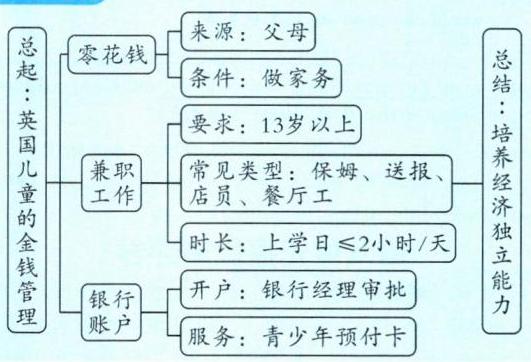
Most kids in Britain get pocket money from their parents. They might have to do chores to get their pocket money. These chores can include cleaning, cooking, washing the dishes, and ironing.
★Part-time work
A part-time job is an option(选择) for teenagers who don't have pocket money or who want to make extra(额外的) money. About 15 per cent of teenagers have a job. Only children over the age of 13 can work. Popular part-time jobs for teens include babysitting(临时保姆), delivering(派送) newspapers, shop work and restaurant work.
Children in Britain can work two hours a day at most on a school day but not during school hours. During weekends and school holidays, they can work longer hours.
★Bank account
Some children and teenagers have a bank account. There is no legal(法定的) age limit(限制) at which you can open a bank account, but a bank manager can decide whether(是否) to open an account for a child or young person. Parents can put pocket money directly into their child's bank account. Most banks have a prepaid(预付的) bank card designed for young people. So many teenagers are getting experience by working part-time, dealing with banks and deciding whether to save or spend their money. These are all steps towards becoming a financially(财政上) independent(独立的) person and making and looking after your own money.
4. How may a 10-year-old British child get pocket money?
A. By doing well in school.
B. By doing chores.
C. By working part-time.
D. By working in banks.
5. How long can British teenagers work on a weekday?
A. More than 3 hours.
B. During school hours.
C. Up to two hours.
D. As long as they like.
6. If British children want to open their own bank accounts, what do they need to do?
A. Have enough money.
B. Reach a certain age.
C. Work part-time.
D. Ask a bank manager.
7. 新考法 主旨归纳 What's the main idea of this passage?
A. British kids' part-time jobs.
B. How British kids get pocket money.
C. Where British kids' money comes from.
D. How British kids get and deal with(处理) their pocket money.
答案:B[文章大意]本文主要介绍了英国孩子获取零花钱、做兼职及管理钱财的方式。
4.B [解析]细节理解题。根据“Most kids in Britain get pocket money from their parents. They might have to do chores to get their pocket money.”可知,10岁的英国孩子可以通过做家务获得零花钱。故选B。
5.C [解析]细节理解题。根据“Children in Britain can work two hours a day at most on a school day but not during school hours.”可知,英国青少年在一个工作日最多能工作2小时。故选C。
6.D [解析]细节理解题。根据“...but a bank manager can decide whether to open an account for a child or young person”可知,英国孩子要开银行账户,需要银行经理决定是否办理。故选D。
7.D [解析]主旨大意题。文章介绍了英国孩子获取零花钱的方式、兼职情况及银行账户管理,核心是英国孩子如何获取和管理零花钱。故选D。