① Nantong, a seaside city in Jiangsu, is rich in intangible cultural heritage (ICH, 非物质文化遗产). Blue Calico Printing(蓝印花布), Banyao Kites and Tongzi Opera are its most famous ones.
These treasures live on because of hard-working inheritors(传承人)—people
who keep traditions alive and bring new ideas. They also have a deep influence on teenagers.
② For Blue Calico Printing, Wang Zhenxing is an important inheritor. Born in the 1930s, he has worked on this art for over 60 years. Since 1958, he has used natural colour from blue grass. He also tried new things: he created three kinds of blue dye(dark, middle and light). He also mixed painting, paper-cutting and other art forms to make new designs.
③ Guo Chengyi keeps Banyao Kites alive. As a national-level kite maker, he has worked on this skill for over 40 years. He holds free classes in communities, teaching students to cut paper, paint pictures and tie kite lines.
④ Hu Dexin is a key inheritor of Tongzi Opera. Born in the 1960s, he comes from a family that has passed down Tongzi Opera for four generations. His father, a top-level ICH inheritor of the country, taught him all the skills. Hu not only followed the old traditions but also made new changes. He let people from other countries learn about Tongzi Opera.
⑤ These traditional arts bring great social value. Every year, Nantong holds Tongzi Opera shows, Banyao Kite festivals and Blue Calico shows. These events draw visitors, bring local people closer and show Nantong's culture to the world. For teenagers, these arts are also very meaningful. Many schools invite inheritors to give lessons. Students learn to make kites or Blue Calico bags. Some even become volunteers, sharing what they've learned at school culture events. This helps them feel proud of their hometown's culture. With the hard work of inheritors and the love of teenagers, Nantong's traditional culture will keep shining for many years.
(
C
)33. What does the underlined part "These treasures live on" mean in the first paragraph?
A. These arts are only loved by old people.
B. These treasures are kept in big museums.
C. These traditional arts are still alive today.
D. These ICH items are hard for teens to learn.
(
A
)34. If a student is interested in paper-cutting, he may be more attracted to
.
① Wang's Blue Calico work
② Guo's Banyao Kites
③ Hu's Tongzi Opera shows
A. ①② B. ①③ C. ②③ D. ①②③
(
B
)35. What is the author's purpose in writing this passage?
A. To tell inheritors' life stories.
B. To introduce arts and inheritors.
C. To suggest living in Nantong.
D. To compare three traditional arts.
(
A
)36. What is the most proper structure of the passage?
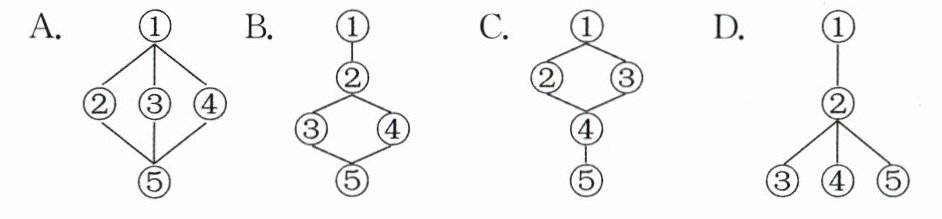
D