重难点一 一般现在时中动词的第三人称单数形式
解析 在含有实义动词的一般现在时的句子中,当主语为第一人称、第二人称或第三人称复数时,谓语动词用动词原形;当主语为第三人称单数时,谓语动词要用第三人称单数形式。动词第三人称单数形式的变化规则如下:
| | 变化规则 | 例词 |
| ---- | ---- | ---- |
| ① | 一般情况下,直接在动词词尾加-s | want—wants, know—knows, play—plays |
| ② | 以s, x, ch, sh或“辅音字母+o”结尾的动词,在词尾加-es |
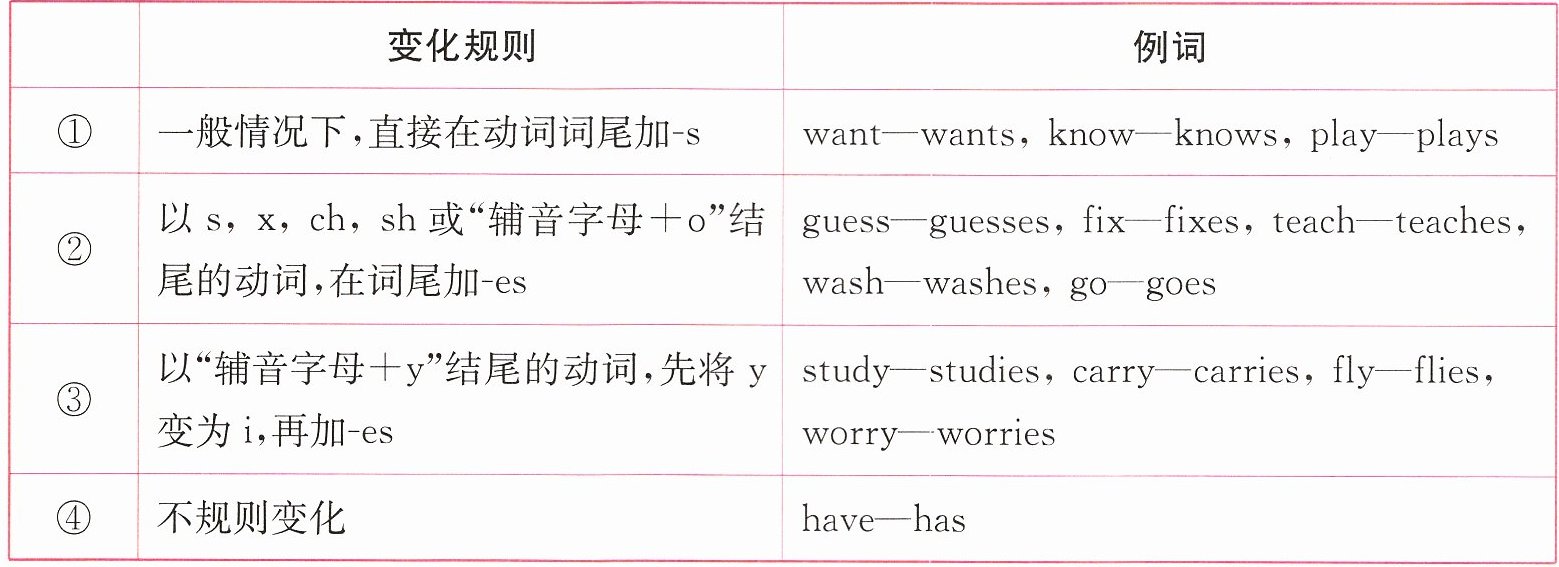
wash—washes, go—goes |
| ③ | 以“辅音字母+y”结尾的动词,先将y变为i,再加-es | study—studies, carry—carries, fly—flies, worry—worries |
| ④ | 不规则变化 | have—has |
[例句] Linda sometimes watches films on Sunday. 琳达有时候在星期天看电影。
Grandma carries a big basket with her. 奶奶随身携带一个大篮子。
[典例剖析] 用所给词的适当形式填空。
1. Mr Brown
(teach) them English at the international school.
2. Su Hai
(study) very hard and she
(get) good grades.
[点拨] 第1小题,Mr Brown是第三人称单数,所以谓语动词teach要用第三人称单数形式teaches。第2小题,Su Hai和she都是第三人称单数,所以谓语动词都要用对应动词的第三人称单数形式,study是以“辅音字母+y”结尾的动词,其第三人称单数形式为studies,get的第三人称单数形式是gets,所以填studies, gets。