一、选词填空。
1. Long long ago, there
was
(is/was) a little boy named Kong Rong. He
gave
(gave/gives) the big pears to his family.
2. Chinese people could
use
(use/used) the abacus(算盘) to count.
3. Nobody
saw
(saw/see) Harry Potter in the magic cloak(斗篷) last Saturday.
4. It was my first time
to visit
(to visit/visit) Universal Beijing Resort(北京环球度假区).
5. This new robot is good at
doing
(doing/to do) Maths problems quickly.
答案:1. was, gave 2. use 3. saw 4. to visit 5. doing
解析:
【分析】
本题为英语选词填空题,需结合句子的时间标志判断动词时态,以及掌握固定搭配、句型来选择正确形式。解题思路:先找每小题的时间状语确定时态,再依据情态动词、固定短语/句型的用法选择合适的动词形式。
【解析】
1. 句中时间状语“Long long ago”(很久很久以前)是一般过去时的标志,因此be动词用is的过去式was,实义动词give用过去式gave;
2. 情态动词could后需接动词原形,故选use;
3. 时间状语“last Saturday”(上周六)是一般过去时的标志,动词see用过去式saw;
4. 固定句型“It's one's first time to do sth.”(某人第一次做某事),故用动词不定式to visit;
5. 固定搭配“be good at doing sth.”(擅长做某事)中,at是介词,后接动名词,故用doing。
【答案】
1. was, gave 2. use 3. saw 4. to visit 5. doing
【知识点】
一般过去时、情态动词用法、非谓语动词
【点评】
本题考查基础英语语法,涵盖时态判断、固定搭配等核心知识点,题型常规,侧重基础应用,适合巩固语法基础。
【难度系数】
0.6
二、用所给词的适当形式填空。
1. Jim
tried
(try) his best to start the car, but it didn't work.
2. The little girl in red
sang
(sing) the song Jasmine Flower (《茉莉花》) loudly just now(刚才).
3. Cao Pi asked Cao Zhi
to write
(write) a poem within seven steps.
4. Long long ago, there were seven dwarfs. They
lived
(live) in the forest.
5. One day, there
was
(be) an argument(争论) between the wind and the sun.
6. I keep
running
(run) for two months because I want
to be
(be) the winner on Sports Day.
答案:1. tried 2. sang 3. to write 4. lived 5. was 6. running, to be
解析:
【分析】
做这类用所给词适当形式填空的题目,需先分析句子的时态标志或固定搭配,再确定动词的正确形式:1. 观察后半句时态;2. 找时间状语判断时态;3. 识别动词固定搭配;4. 结合there be句型就近原则判断be动词形式,逐步推导即可。
【解析】
1. 句中后半部分“but it didn't work”为一般过去时,前后时态需一致,故将try变为过去式tried。
2. 时间状语“just now”(刚才)表明动作发生在过去,需用一般过去时,sing的过去式为sang。
3. 固定搭配“ask sb to do sth”(要求某人做某事),此处需用动词不定式,故填to write。
4. 时间状语“long long ago”(很久很久以前)是一般过去时的标志,live的过去式为lived。
5. 时间状语“one day”此处指过去的某一天,there be句型遵循就近原则,后面的主语“an argument”是单数,故be动词用was。
6. 固定搭配“keep doing sth”(一直做某事)和“want to do sth”(想要做某事),故分别将run变为running,be变为to be。
【答案】
1. tried 2. sang 3. to write 4. lived 5. was 6. running, to be
【知识点】
一般过去时、动词不定式、固定搭配
【点评】
本题为英语基础题型,考查动词适当形式,涵盖一般过去时运用和常见动词固定搭配,需学生掌握时态标志词和固定短语用法,整体难度较低。
【难度系数】
0.7
三、按要求完成下列各题。
1. There is some milk tea in the paper cup.(用 just now 改写句子)
There
was
some milk tea in the paper cup just now.
2. The tiger walked behind the fox.(改为同义句)
The fox walked
in
front
of
the tiger.
3. My sister is clever. She
is good at/does well in
Maths.(根据图片提示补全句子)
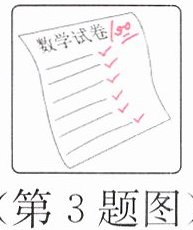
(第3题图)
4. wanted, learn, new, a, skill, John, to (. )(连词成句)
John wanted to learn a new skill.
5. 要保重,别忘了给我写信。(根据中文提示完成句子)
Take care, and don't
forget
to
write
to me.
答案:1. was 2. in front of 3. is good at/does well in 4. John wanted to learn a new skill. 5. forget to write
解析:
【分析】
本题为英语基础题型,需结合时态、介词、固定搭配、连词成句等知识点解题:
1. 第1题:时间状语just now表过去,需将一般现在时的there be改为一般过去时,milk tea不可数,be动词用was;
2. 第2题:需转换方位介词短语,behind的反义为in front of;
3. 第3题:结合图片(数学满分),需填“擅长”的固定搭配,主语是第三人称单数,对应is good at/does well in;
4. 第4题:连词成句需先确定主语John,再按“主语+谓语+不定式+宾语”的结构排列;
5. 第5题:根据中文提示,需填“忘记写信”的固定搭配forget to write。
【解析】
1. 原句是一般现在时,时间状语just now(刚才)提示用一般过去时,there be句型中,不可数名词milk tea对应的过去式be动词为was,故填was;
2. 原句意为“老虎走在狐狸后面”,同义句需表达“狐狸走在老虎前面”,“在……前面”用固定短语in front of,故填in front of;
3. 图片显示数学试卷满分,提示“擅长数学”,固定搭配be good at/do well in表示“擅长”,主语she是第三人称单数,故填is good at/does well in;
4. 连词成句:先找主语John,谓语是wanted to learn,宾语是a new skill,组合为John wanted to learn a new skill;
5. 根据中文“别忘了给我写信”,固定搭配forget to do sth表示“忘记做某事”,“写信”是write to sb,故填forget to write。
【答案】
1. was
2. in front of
3. is good at/does well in
4. John wanted to learn a new skill.
5. forget to write
【知识点】
一般过去时、方位介词短语、固定搭配
【点评】
本题为初中英语基础题型,考察时态转换、同义短语、固定搭配及连词成句等核心基础知识点,侧重基础应用能力,是日常学习中常见的练习类型。
【难度系数】
0.7
四、将下列句子重新排列成一段通顺的短文。
Lily was a young girl and loved water. She watched others swimming in the pool and hoped she could do it too. One sunny day, her parents took her to the pool to learn how to swim.
(
3
)Day by day, she kept learning and progressed(进步) a lot. She believed she could do anything with practice, even swim!
(
2
)Slowly, Lily started to kick her legs and move her arms in the water. She even put her face in the water and blew bubbles, just as the instructor showed her. After many tries, Lily tried to float(漂浮) on her own.
(
1
)At first, Lily was afraid of going into the deep water. But her parents encouraged her and the swimming instructor was very kind.
(
4
)Finally, after lots of practice, Lily swam across the pool all by herself. Her parents and the instructor cheered for her. Lily was so happy.
答案:3 2 1 4
解析:
【分析】本题为句子排序题,需依据记叙文的事件发展顺序(时间线索)解题。首先抓取表示顺序的关键词:At first(起初)是故事开端,Slowly(慢慢地)是学习过程的推进,Day by day(一天天)是进步过程,Finally(最终)是故事结果,按时间先后逻辑即可完成排序。
【解析】根据时间线索:1. “At first(起初)”对应故事起始阶段,填在第三个括号;2. “Slowly(慢慢地)”描述学习动作的过程,填在第二个括号;3. “Day by day(一天天)”体现持续学习后的进步,填在第一个括号;4. “Finally(最终)”是成功结果,填在第四个括号。因此括号内依次为3、2、1、4。
【答案】3 2 1 4
【知识点】句子排序、记叙文逻辑
【点评】本题通过清晰的时间线索考查学生对记叙文事件发展顺序的理解,难度较低,学生可通过关键词快速定位顺序。
【难度系数】0.6