B
Tom had a book in his hand and tears in his eyes. “What worries you, Tom?” asked Mrs White.
“Our teacher asked us to
recite the
poem Little Jim. I don’t think I can do it well,” said Tom.
“Why not?” asked Mrs White.
“The boys said that I can’t,” said Tom
in a sad voice.
“Don’t mind what they said. Let them see that you can do it,” said Mrs White.
“I don’t think I can,” said Tom. “The poem is so long and difficult for me. But I want to try my best to recite it.”
“Well, dear son,” said Mrs White, “look at that
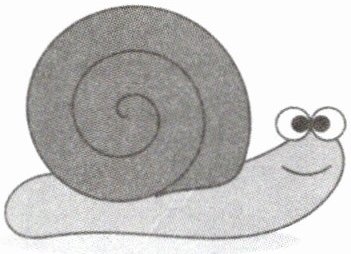
snail on the wall. How slow it is! Watch it. You will see it get to the top at last. So just try a few lines each day, and you may recite it in the end.”
Tom thought he could
catch up with the boys, and he might
run a race with the snail. So he planned to try it.
At last, the day came. The teacher called up the boys to recite the poem. After six boys recited it, it was Tom’s turn. Most boys thought Tom could
fail. But to their surprise, Tom did not miss a word. His heart was full of joy when the teacher said, “Well done, Tom!” After the rest of the class tried, the teacher said Tom did best.
“And now tell us how you could recite the poem so well,” said the teacher.
“A snail on the wall taught me how to do it,” said Tom.
There was a loud laugh when Tom said this. But the teacher said, “Don’t laugh! We can learn a lot from things such as snails. How did the snail teach you, Tom?”
“I saw it climb up the wall
bit by bit. It didn’t stop. At last, it climbed to the top. And I thought I could do the same. So I recited it bit by bit, and did not give up,” said Tom.
“Well done, Tom!” said the teacher. “Now boys, let us give a good cheer to Tom and the snail on the wall.” The classroom rang with a great cheer.
词汇
recite /rɪˈsaɪt/ v. 背诵
poem /ˈpəʊɪm/ n. 诗
in a sad voice 用悲伤的声音
snail /sneɪl/ n. 蜗牛
catch up with 追上
run a race 跑一场比赛
fail /feɪl/ v. 失败
bit by bit 一点点地
句型
The classroom rang with a great cheer. 教室里响起了热烈的欢呼声。
ring with 回荡着
⇒ The cinema rang with the children’s laughter.
理解
1. What can we learn from snails?
Don't stop. Learn bit by bit.
2. Have you ever learned from snails? Share your story with us.
At the age of seven, I began to learn to ride a bike, but I fell from the bike again and again. My mum encouraged me and asked me not to stop trying. I learned bit by bit and finally I could ride a bike.
课外泛读
Foolish monkeys
Long long ago, there was a very large and dark forest. A group of monkeys arrived at the forest. It was winter season, and the monkeys tried hard to survive(存活) the cold nights. They were hunting for fire to get warm.
One night, they saw a firefly(萤火虫) and thought it was fire. All the monkeys in the group shouted, “Fire! Fire! Fire! Yeah, we got fire!”
Some monkeys tried to catch the firefly but it escaped(逃走). They were sad as they could not catch the fire. They were talking to themselves that they couldn’t live in the cold if they didn’t get the fire.
The next night, again they saw many fireflies. After some attempts(尝试), the monkeys caught a few fireflies. They put the fireflies in a hole and tried to blow the fireflies.
They blew the fireflies very hard without knowing the fact that they were fireflies!
An owl was watching the monkeys. The owl reached the monkeys and told them, “Hey, those are not fire! They are fireflies. You won’t be able to make fire from them!”
The monkeys laughed at the owl. One monkey said, “Hey, old owl, you don’t know anything about how to make fire. Don’t disturb(打扰) us!”
The owl warned(警告) the monkeys again and asked them to stop their foolish act. “Monkeys, you cannot make fire from the fireflies! Please hear my words.”
The monkeys still tried to make fire from the fireflies.
The owl told them again to stop their foolish act. One monkey shouted at the owl and the owl left.
The monkeys were simply doing the foolish act for several(几个) hours and it was almost midnight. They were very tired and realized that the owl was correct and that they were trying to blow a firefly.
Finally, they went to a cave nearby and escaped from the cold.
理解
1. How many times did the owl warn the monkeys?
Three times.
2. What can you learn from the story?
We may go wrong many times and should listen to the advice from others.