人与
自我
自我管理 「2026 广东深圳罗湖期末」
Have you ever thought about the power of a single piece of paper? Imagine folding it over and over again. Do you think it could reach the moon? This sounds impossible. In real life, paper has thickness and resists(抵抗)bending, so most people can’t fold a sheet more than seven or eight times.
However, in the world of theoretical math(理论数学), this ordinary object can achieve amazing heights. A normal paper is very thin, perhaps 0.1 mm. When you fold it once, it becomes twice as thick. After ten folds, it’s over 10 centimeters thick. Each fold doubles its thickness. This is called exponential growth(指数增长). It grows much faster than you expect. It’s so powerful that after just 42 folds, the paper’s thickness would be about 439,804 km, which is more than the distance to the moon!
This thought experiment teaches an important lesson. That is, small repeated actions can lead to great results. For example, if you improve by just 1% every day, after one year you would be about 37 times better than when you started. We often miss this because we often think in a simple, straight-line way, not exponentially, and don’t realize how quickly small,
consistent efforts, like improving by 1% daily, add up.
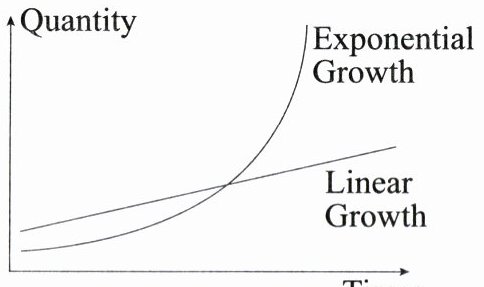
Whether it’s saving money, learning a skill, or building a good habit, this way of thinking helps unlock your potential(潜能). So, the next time you feel a big goal is too difficult, remember the paper. Every fold counts, and small, continuous efforts can really lead to great achievements.
(
B
)48. 特色考法 开篇方式题 How does the author start the text?
A. By telling a real story about folding paper.
B. By asking questions and inviting imagination.
C. By giving the meaning of exponential growth.
D. By comparing paper with other thick objects.
(
D
)49. What is the main lesson from the thought experiment?
A. We should think in a straight-line way.
B. We should improve by 1% every day.
C. We should fold paper many times.
D. We should keep small repeated efforts.
(
C
)50. What does the underlined word “consistent” in paragraph 3 mean?
A. Done for a while. B. Made in a hurry.
C. Maintained all along. D. Repeated a little.
(
D
)51. What can we learn from the last paragraph?
A. Each paper fold can work well.
B. Skills and savings can unlock potential.
C. Remembering paper can beat difficulties.
D. Small continuous efforts can achieve greatness.