C
Floods are becoming more and more common around the world. The warming climate is leading to heavier rainfall, but could the way that cities are growing be making things worse? Could we design cities in a different way to reduce the risk of flooding?
As cities get larger, and more and more land is under concrete (混凝土), less water is taken in and more needs to be carried away by storm drains (雨水渠) and sewerage systems (下水道系统). As there is more water than they can hold, the risk of flash flooding increases.
Could it be that we’ve been going about it the wrong way? Chinese landscape designer Yu Kongjian certainly thinks so. In 2013, he came up with the idea of “sponge cities (海绵城市)”, which are designed to take in water—like a sponge—reducing the risk of sudden floods. Natural solutions are encouraged, using riverside parks and ponds to take in floodwater. Ways inspired by this have been adopted (采用) by cities across the world. Auckland, in New Zealand, was named the sponge city in one study. It has built green banks and connected parks instead of the concrete drains around the Oakley Creek stream. This has reduced flooding in the nearby housing areas as well as the amount of waste which used to be washed into the sea.
Auckland has taken a natural way, but a much more high-tech method can be seen in Amsterdam. The Dutch city has fixed blue-green roofs on many buildings. These roofs are covered with plants on the top, with lower layers that collect and store rainwater. This water can be used by people in the building below to water plants or flush toilets. Smart software can even tell the roofs to release water ahead of upcoming storms to make the system take in more rainwater. It can even know which areas of the city are most at risk and take effective action.
Yu Kongjian describes the sponge city way as using tai chi with nature instead of boxing. Questions have been raised as to whether a natural way is enough when people are faced with increased rainfall globally. What remains to be seen is whether expanding natural methods and combining them with modern technology can help save many more people from flooding.
(
C
) 42. Why is rainfall getting heavier around the world?
A. Because cities need more rainwater.
B. Because cities are getting larger.
C. Because the climate is getting warmer.
D. Because cities are under concrete.
(
D
) 43. What is the purpose of the idea of “sponge cities”?
A. To help cities save water.
B. To develop larger cities.
C. To build more tourist attractions.
D. To protect cities from floods.
(
B
) 44. What is the structure of this passage?
A.
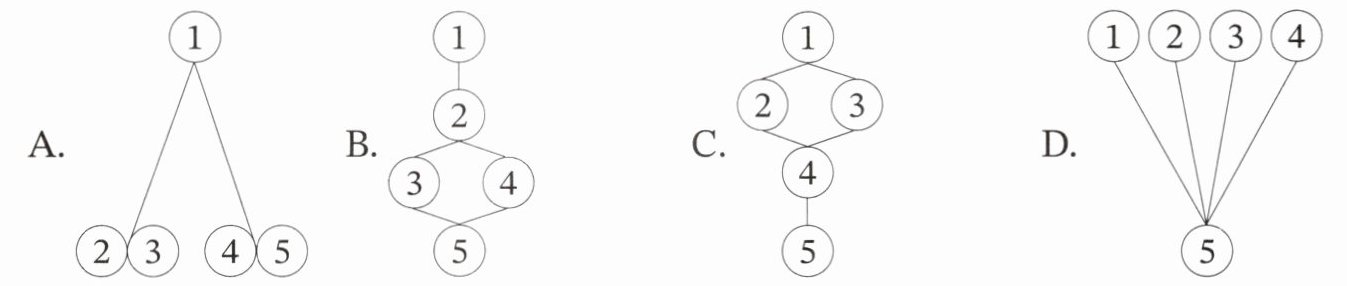
(
C
) 45. What is the writer’s attitude towards the future role of “sponge cities”?
A. Worried.
B. Hopeful.
C. Uncertain.
D. Uncaring.