1. interest
【感知】
» We often hang out together because we have similar hobbies and interests.(教材第26页)我们经常一起出去玩,因为我们有相似的爱好和兴趣。
» It is a topic that interests me greatly. 这是一个让我非常感兴趣的话题。
» Lisa is interested in playing the piano, so she wants to join the music club. 莉萨对弹钢琴很感兴趣,所以她想加入音乐俱乐部。
» She found the book very interesting. 她觉得这本书非常有趣。
【探究】
(1)interest 可作名词,意为“
业余爱好;兴趣
”,也可作动词,意为“使感兴趣”。
(2)interested 与 interesting 的用法辨析
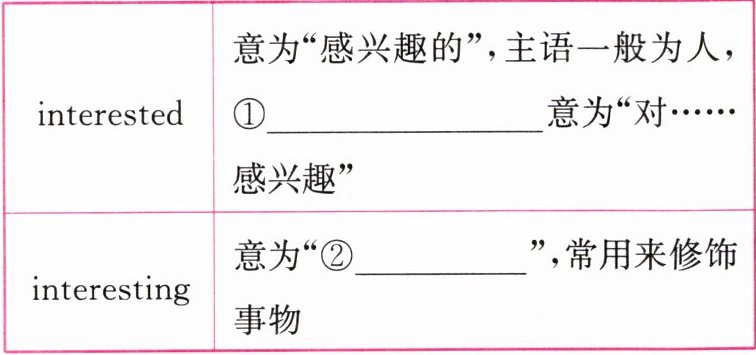
【应用】
用所给单词的适当形式填空
①Her main
interests
(interest) are music, tennis and cooking.
②Thanks for inviting me here. I think the party is really
interesting
(interest).
③The boy is
interested
(interest) in English.
similar, and the other group supports the view that friends should be different. Then let them have a debate(辩论).
2. direct
【感知】
» gives direct opinions(教材第27页)给出直接的意见
» Sometimes it's impolite to ask questions too directly. 有时,太直接地提出问题是不礼貌的。
» The man is a great director and he has directed many films. 这个男人是一位伟大的导演,他导演过很多电影。
» I watched them leave and then drove off in the opposite direction. 我看着他们离开,然后开车朝相反的方向驶去。
【探究】
(1)direct 作形容词,意为“率直的;直接的”。反义词为 indirect,意为“间接的”;副词形式为
directly
,意为“直接地”。
(2)direct 也可作动词,意为“导演(戏剧或电影);指导”,其名词形式有:
①director
导演
②
direction
方向
【应用】
用所给单词的适当形式填空
①Life is a dictionary. We should learn
directly
(direct) from it.
②I have a poor sense of
direction
(direct), so I am afraid to go out alone.
③Who is the
director
(direct) of this new film?