B
Plants cannot move like animals, but they communicate and respond to the environment through their own movement—a kind of “plant body language”. Scientists have been surprised by these movements and created inventions based on them.
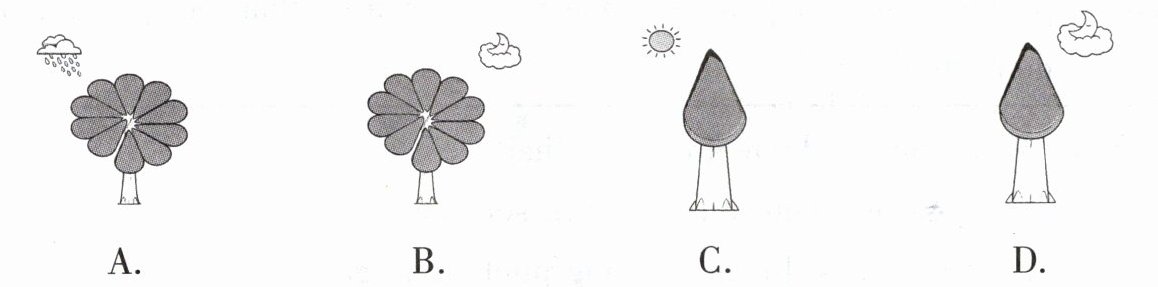
Everyone knows sunflowers turn to face the sun as it moves across the sky. This gave engineers the idea to create SmartFlower solar panels(电池板). They are in the shape of flowers, and each “petal”(花瓣) is a solar panel. SmartFlower follows the sun all day, which helps produce 40% more energy than normal solar panels. After dark or when there’s bad weather like heavy rain, the “petals” will close up.
Some plants, such as ivy(常春藤), can climb walls using sticky pads. The pads help ivy stick to wood, stone, and other surfaces. After studying this plant, scientists created soft climbing robots. Though small, these robots are strong enough to move on different surfaces and turn corners. This allows them to work in hard-to-reach places.
Another amazing plant is the exploding cucumber(喷瓜). It has a cool trick. When touched, it shoots seeds up to 6 metres away. Learning from this plant’s “body language”, medical researchers have developed a new way to send medicine to where it’s needed in the body, just as the plants shoot seeds to the right places.
Plants may seem quiet and still, but their special movements have given ideas to real-world inventions. Next time you see a plant, watch its “body language” carefully; you might catch the next scientific breakthrough.
(
) 4. Which picture best describes the invention in paragraph 2?
A. B. C. D.
(
) 5. Where is the climbing robot designed to work?
A. Under water. B. On the farm. C. On high walls. D. In playgrounds.
(
) 6. What is special about the exploding cucumber?
A. It can play tricks on others. B. It can send out the seeds far.
C. It helps people make medicine. D. It can grow up to 6 metres tall.
(
) 7. What is the best title for the passage?
A. Nature’s behaviour B. Plants have gone wild
C. Nature’s language D. Plants drive creations