零五网 全部参考答案 实验班提优训练答案 2026年实验班提优训练七年级英语上册译林版 第139页解析答案
Ⅱ. 从方框中选择合适的单词或短语并用其适当形式填空,有一个是多余的
documentary; different ways; the lion dance; celebrate; correct; mean
1. We had lots of fun during the school's sports day with games, races, and colourful
celebrations
.
2. Now we can pronounce the sounds [w] and [v]
correctly
in words.
3. I know more about the
meaning
of the important festival now.
4. A
documentary
is a television or radio programme, or a film, which shows real events or provides information about a particular(特指的) subject.
5. I think we have
different ways
to solve problems.
答案:1. celebrations 2. correctly 3. meaning
4. documentary 5. different ways
解析:
【分析】
解这类选词并用适当形式填空的题目,首先第一步要先梳理所有备选单词/短语的词义、词性,提前预判它们可能的变形方向;第二步逐句分析每个句子的语义逻辑,先判断空格位置需要填入的词性,再结合句意从备选内容里筛选匹配,同时按照语法规则调整单词的正确形式;最后验证所有填入内容是否通顺,确认未使用的多余词汇确实不符合任意空格的要求,完成校验。
【解析】
1. 第一句句意:我们在学校运动会期间玩得很开心,有游戏、赛跑以及丰富多彩的相关庆祝活动。空格前的形容词colourful修饰名词,且and并列的games、races都是可数名词复数,将备选的动词celebrate变为名词复数celebrations,表庆祝活动,完全符合语境。
2. 第二句句意:现在我们可以在单词里正确发出[w]和[v]的音。空格用于修饰动词pronounce(发音),修饰动词需要用副词,将备选的形容词correct变为副词correctly,意为正确地,符合语义。
3. 第三句句意:我现在对这个重要节日的意义了解更多了。此处是固定结构"the + 名词 + of",将备选的动词mean变为名词meaning,the meaning of...表示“……的意义”,符合句子逻辑。
4. 第四句是对某类事物的定义:这类内容是电视/广播节目或者影片,展示真实事件、提供特定主题的相关信息,对应备选名词documentary(纪录片),前面有不定冠词a,直接用原形即可。
5. 第五句句意:我认为我们有不同的方法来解决问题,备选短语different ways代入后,构成搭配have different ways to do sth,意为“有不同的方法做某事”,完全符合句意。
最终未使用的多余词汇是the lion dance,符合题干有一个多余项的要求。
【答案】
1. celebrations 2. correctly 3. meaning 4. documentary 5. different ways
【知识点】
词性转换;名词词义辨析;选词填空规则
【点评】
本题属于基础词汇运用题型,重点考察学生对单词词性变形规则的掌握、结合语境判断词义的能力,解题时要注意观察空格前后的修饰成分,快速判断所需词性,做完后把答案代入句子通读,就能很容易排查出搭配不通顺的错误。
【难度系数】
0.7
Ⅲ. 根据要求或汉语意思完成下列句子
1. The children are talking about the football game.(改为一般疑问句)
the children
about the football game?
2. My mother is shopping in the gift shop.(对画线部分提问)
your mother
?
3. The boy is calling his parents now.(对画线部分提问)
the boy
now?
4. 男生中有一个正在练习踢足球。
One of the boys
playing football.
5. 我妈妈正在卧室里和我爸爸谈话。
My mother
with my father in the bedroom.
答案:1. Are;talking 2. Where is;shopping 3. Who's;calling
4. is practising 5. is talking
解析:
【分析】
这组题目全部围绕现在进行时的用法展开,解题时首先要牢记现在进行时的核心结构“am/is/are + 动词现在分词”:
1. 第一题改一般疑问句:现在进行时的陈述句变一般疑问句,直接将句中的be动词提到句首,其余部分语序保持不变即可,对应提取原句的be动词are,保留现在分词talking。
2. 第二题对地点状语划线提问:先判断划线部分是地点,选用特殊疑问词Where,之后将原句剩余部分调整为一般疑问句语序,把be动词is提前,保留谓语的现在分词shopping。
3. 第三题对动作的对象(人物)划线提问:判断划线部分是指代人的宾语,选用特殊疑问词Who,将who和be动词is缩写为Who's,后续保留谓语的现在分词calling即可。
4. 第四题汉译英:“正在”提示用现在进行时,主语One of the boys是单数概念,be动词选is,“练习”对应practise的现在分词practising。
5. 第五题汉译英:“正在”提示用现在进行时,主语My mother是第三人称单数,be动词选is,“谈话”对应talk的现在分词talking,构成短语talk with sb。
【解析】
1. 原句是现在进行时陈述句,变一般疑问句需将be动词are提前至句首,谓语部分的现在分词talking形式不变,故填Are; talking。
2. 划线部分为地点状语in the gift shop,对地点提问用特殊疑问词Where,后接一般疑问句语序,be动词is提前,谓语保留现在分词shopping,故填Where is; shopping。
3. 划线部分为指代人的宾语his parents,对人提问用特殊疑问词Who,将Who和be动词is缩写为Who's,谓语保留现在分词calling,故填Who's; calling。
4. 句子描述正在发生的动作,用现在进行时,主语One of the boys作主语时谓语视为单数,be动词用is,“练习做某事”用practise doing sth,practise的现在分词为practising,故填is practising。
5. 句子描述正在发生的动作,用现在进行时,主语My mother是第三人称单数,be动词用is,“和某人谈话”用talk with sb,talk的现在分词为talking,故填is talking。
【答案】
1. Are;talking 2. Where is;shopping 3. Who's;calling 4. is practising 5. is talking
【知识点】
现在进行时结构,句式变换,主谓一致
【点评】
本题是现在进行时的基础专项练习,覆盖了现在进行时的一般疑问句变换、特殊疑问句提问、以及对应的汉译英应用,核心易错点是要注意“one of + 名词复数”作主语时谓语动词要使用单数形式,同时牢记现在进行时中be动词和现在分词缺一不可。
【难度系数】
0.8
Ⅳ.(2026·如皋九华初级中学阶段检测改编)阅读理解
①In Chinese celebrations, whether it is an important birthday or a traditional festival, one of the most typical(典型的) elements(元素) is the lucky and auspicious(吉祥的) symbols.
②To most Chinese, when it comes to lucky symbols, the top three are surely fu, lu and shou.
③During the Chinese New Year, we would put up red squares with the character fu on them. Some people would put their fu character upside down.
④Lu often has something to do with one's job and wealth. Lu means good pay and ranks(等级) in ancient China. A hulu, or a gourd(葫芦), sounds like hulu (护禄). So, people use gourds to scare away bad spirits and illnesses and keep rich and successful.
⑤ Shou means long-lived life. When someone is having his birthday celebration, we would call this person shouxing. At birthday parties for elder people, we often see peaches. According to the legend, the Queen Mother of the West grows peaches in her own garden, and whoever eats these peaches will live forever.
⑥ Besides the three, lucky and auspicious symbols can also be easily found in food. For the Chinese New Year dinner, most families would have fish because it sounds like "surplus(有余)" in Chinese. In southern China, niangao, a kind of rice cake, is a lucky food because niangao sounds like getting higher every year in Chinese.
1. 新考法 主旨归纳 The writer mainly tells us about
D
.
A. typical traditional Chinese festivals
B. the secrets of richness and success
C. traditional Chinese eating culture
D. Chinese lucky and auspicious symbols
2. When a Chinese person wants to get a better job, he or she may
B
.
A. call shouxing for help
B. carry a gourd with him or her
C. grow peaches in his or her garden
D. have tangyuan with family often
3. 新考法 推断篇章结构 The structure(结构) of the passage may be
D
.
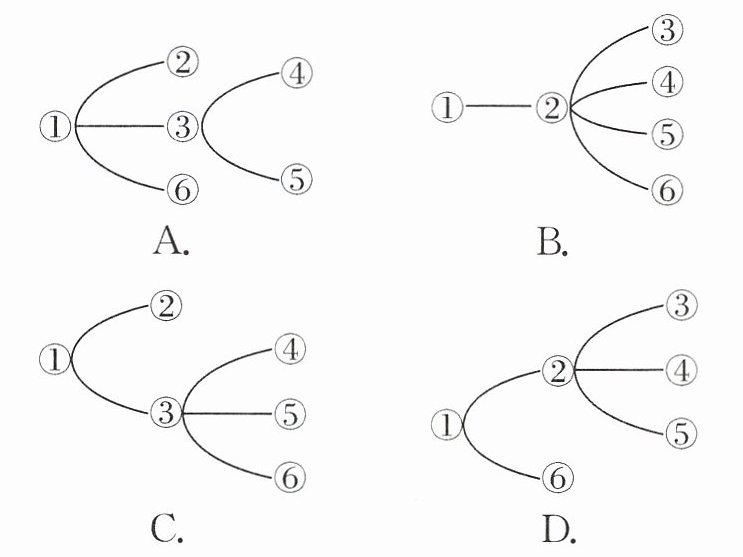
4. 新考法 推断文章出处 Where would you find the passage?
A. In a magazine.
B. In a guidebook.
C. In a music book.
D. In a sports book.

答案:[文章大意]本文是一篇说明文。本文主要介绍了中国庆祝活动中象征幸运和吉祥的符号,包括福、禄、寿以及食物中的吉祥象征。
1. D [解析]主旨归纳题。根据文章首句“In Chinese celebrations, whether it is an important birthday or atraditional festival, one of the most typical (典型的)elements (元素) is the lucky and auspicious (吉祥的)symbols.”以及后文围绕福、禄、寿等吉祥符号展开的描述可知,本文主要讲述的是中国象征幸运和吉祥的符号。故选D。
易错警示 在做主旨归纳题时可能出现的错误:
1. 以偏概全:部分选项可能只涵盖了文章的某一小部分内容,无法体现文章的整体主旨,范围过小;
2. 有些选项的范围超出了文章实际讨论的范畴,显得空洞宽泛,偏离主旨;
3. 部分选项可能与文章的主旨毫无关联,只是利用文章中出现的一些词汇来迷惑考生;
4. 文章往往带有一定的情感色彩或作者意图,若标题未能体现这一点,也可能不准确。
2. B [解析]细节理解题。根据“Lu often has something todo with one's job and wealth. Lu means good pay and ranks(等级) in ancient China. A hulu, or a gourd (葫芦),sounds like hulu (护禄). So, people use gourds to scareaway bad spirits and illnesses and keep rich and successful.”可知,禄与工作、财富有关,葫芦与“护禄”谐音,人们用葫芦来驱邪避病,保持富贵和成功,所以当一个中国人想要得到更好的工作时,他或她可能会随身携带一个葫芦。故选B。
3. D [解析]篇章结构题。文章第①段总述在中国庆祝活动中,象征幸运和吉祥的符号是最典型的元素之一;第②段引出福、禄、寿这三个主要的吉祥符号;第③④⑤段细节介绍福、禄、寿符号的含义;第⑥段介绍除了这三个符号外,象征幸运和吉祥的符号在食物中的体现。故选D。
4. A [解析]文章出处题。文章主要介绍了中国庆祝活动中象征幸运和吉祥的符号,包括福、禄、寿以及食物中的吉祥象征,这样的内容更有可能出现在杂志上,而不是旅游指南、音乐书或体育书中。故选A。
上一页 下一页