Ⅰ. 根据句意及首字母提示完成单词
1. Can you tell me h
ow
to have a good lifestyle?
2. What about p
laying
the piano with Zhang Ke this afternoon?
3. Apples and bananas are both my favourite f
ruits
.
4. What e
lse
would you like to eat?
5. I want to buy some m
eat
—two kilos of pork and a kilo of beef.
答案:1. how 2. playing 3. fruits 4. else 5. meat
解析:
【分析】
做这类句意+首字母提示的单词填空题,解题思路分三步:第一步先通读完整句子,准确理解句子的整体含义;第二步结合空格给出的首字母,匹配符合句意的对应单词;第三步还要验证空格处的语法形式是否符合规则,比如介词后动词要变动名词、名词单复数是否匹配等,避免只看词义忽略形式出错。
逐个推导:1. 句子含义是“你能告诉我________拥有好的生活方式吗”,后面接不定式结构,结合首字母h,对应表达“如何”的疑问词;2. 句子含义是“今天下午和张可一起________钢琴怎么样”,what about结构后要接动词ing形式,“弹钢琴”是play the piano,首字母p对应变形后的词;3. 句子说苹果和香蕉都是我最喜欢的________,二者都属于水果,首字母f,这里指两类水果要用复数形式;4. 句子含义是“你想吃点别的什么吗”,结合首字母e,对应固定搭配what else;5. 后文提到两公斤猪肉、一公斤牛肉,都属于肉类,首字母m对应不可数名词meat。
【解析】
1. 此处构成“疑问词+不定式”结构作tell的宾语,表达“如何拥有好的生活方式”,填入how。
2. 固定句型what about后接动名词作宾语,play the piano是固定搭配“弹钢琴”,因此填入play的动名词形式playing。
3. 主语是苹果和香蕉两类不同的水果,表示多种水果时fruit可用复数形式fruits,符合句意,填入fruits。
4. what else是固定常用搭配,意为“还有什么、别的什么”,符合句意,填入else。
5. 后文提到的猪肉、牛肉都属于肉类,meat是不可数名词,符合语境,填入meat。
【答案】
1. how 2. playing 3. fruits 4. else 5. meat
【知识点】
疑问词+不定式结构;固定短语搭配;名词的数
【点评】
本题属于七年级英语基础词汇考察题型,全部围绕日常高频核心词汇和常用固定搭配设置考点,难度较低,解题时除了匹配词义,还要注意部分空格的语法形式要求,比如介词后的动词要变为动名词,不要出现形式类错误。
【难度系数】
0.8
Ⅱ. 新考法 图片理解 根据下面的食品图片及汉语提示,在对应的每个句中空缺处填写正确的单词
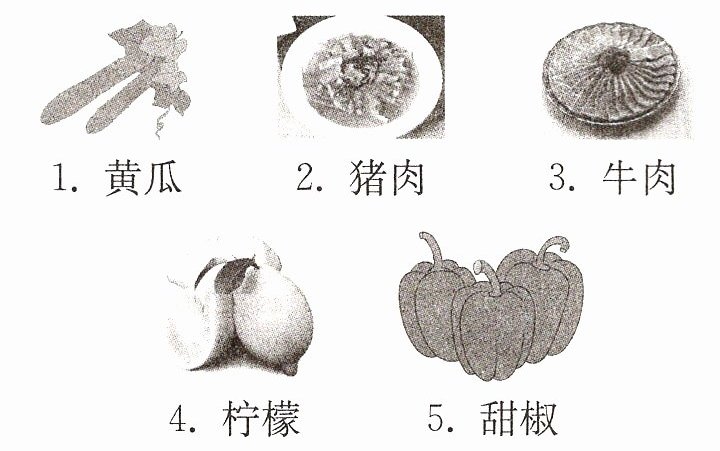
1. To keep healthy, more and more young people eating
cucumbers
for dinner.
2. The doctor asks me not to eat more
pork
.
3. I have some
beef
and milk for breakfast.
4. How many
lemons
would you like, please?
5. My best friend Millie doesn't like
peppers
at all.
答案:1. cucumbers 2. pork 3. beef 4. lemons 5. peppers
解析:
【分析】
这是结合图片提示的英语词汇填空题,解题思路如下:首先先匹配每道题对应的配图下方的汉语提示,回忆对应食物的英文单词,之后再结合句子的语法规则判断单词是否需要变形:1. 第一题对应“黄瓜”,此处泛指这类食材,可数名词要使用复数形式;2. 第二题对应“猪肉”,属于不可数名词,无需变形;3. 第三题对应“牛肉”,是不可数名词,直接填原形即可;4. 第四题出现how many,后面必须接可数名词的复数形式,“柠檬”要变为复数;5. 第五题对应“甜椒”,此处泛指这类事物,用复数形式即可。
【解析】
1. 配图对应汉语“黄瓜”,单词为cucumber,此处表示一类事物,用可数名词复数形式cucumbers。
2. 配图对应汉语“猪肉”,pork是不可数名词,没有复数变化,直接填写pork。
3. 配图对应汉语“牛肉”,beef是不可数名词,直接填写原形beef。
4. 配图对应汉语“柠檬”,how many后接可数名词复数,lemon的复数形式为lemons。
5. 配图对应汉语“甜椒”,此处泛指这类食材,用pepper的复数形式peppers。
【答案】
1. cucumbers 2. pork 3. beef 4. lemons 5. peppers
【知识点】
食物类名词,可数名词复数,不可数名词
【点评】
本题结合生活化的食物图片考查基础词汇拼写,同时兼顾名词单复数的语法应用,难度较低,需要学生准确记忆常见食物类单词,注意句中修饰成分对名词形式的要求,避免出现单复数误用的小错误。
【难度系数】
0.8
思维拓展提优
搭建综合应用与创新能力提升平台
Ⅲ.句型转换
1. I often have
a cake for supper.(对画线部分提问)
What
do
you often
have
for supper?
2. Daniel often runs
to keep fit.(对画线部分提问)
Why
does
Daniel often run?
3. Let's have a walk after supper.(改为同义句)
What/How
about
having a walk after supper?
4. What else do you like?(改为同义句)
What
other
things
do you like?
5. I don't like bananas.(改为同义句)
I
hate/dislike
bananas.
答案:1. What do; have 2. Why does 3. What/How about 4. other things 5. hate/dislike
解析:
【分析】
做这类句型转换题的核心思路是先明确题目要求,再结合原句时态、语法规则推导答案:①对画线部分提问的题型,第一步先判断画线部分的属性(物品、目的、原因等),选出对应的特殊疑问词;第二步判断原句时态,本题所有句子都是一般现在时,再根据主语的人称和数选择正确的助动词,注意助动词后谓语动词要变回原形。②同义句转换题型,要在完全保留原句核心含义的前提下,结合空格后的词形要求,选择匹配的同义词汇或固定句型,比如空格后接动名词就要选后面能接doing的提建议结构。
【解析】
1. 第一题画线部分a cake是物品,对事物提问用特殊疑问词What;原句是一般现在时,主语为第一人称I,变疑问句要转换为第二人称you,借助助动词do,助动词后谓语动词用原形have,因此填What do; have。
2. 第二题画线部分to keep fit是跑步的目的,对动作的目的/原因提问用特殊疑问词Why;主语Daniel是第三人称单数,一般现在时的疑问句需要借助助动词does,因此填Why does。
3. 第三题原句是提建议“晚饭后我们去散步吧”,空格后接动名词having,表建议且后接动名词的固定结构是What about/How about,意为“……怎么样”,完全匹配语境,因此填What/How about。
4. 第四题What else意为“别的什么”,对应的同义固定表达就是what other things,else修饰疑问代词的用法等价于other修饰可数名词复数things,因此填other things。
5. 第五题原句含义是“我不喜欢香蕉”,表达“不喜欢”含义的同义及物动词是dislike或者hate,主语为I,一般现在时用动词原形即可,因此填hate/dislike。
【答案】
1. What do; have 2. Why does 3. What/How about 4. other things 5. hate/dislike
【知识点】
特殊疑问句构造;同义短语转换;一般现在时
【点评】
本题属于基础提优类句型转换题,综合考察了一般现在时的疑问句规则、常见提建议句型、同义词汇短语积累,易错点集中在第三人称单数助动词误用、提建议句型的动名词搭配规则,学生需要平时多积累同义表达,做题时注意观察空格后给出的词形限制,就能避免失分。
【难度系数】
0.6
Ⅳ. 翻译句子
1. 不健康的生活犹如干涸的河流。(be like)
A life without health is like a river without water.
2. 午餐为什么不吃些蔬菜和鱼呢?
Why not eat some vegetables and fish for lunch?
3. 早餐我通常吃点面包,喝些果汁。
I usually have some bread and juice for breakfast.
4. 基蒂和丹尼尔都有健康的生活方式。
Both Kitty and Daniel have healthy lifestyles.
5. (2025·北京西城区期末)茶有益于我们的健康。(good for; health)
Tea is good for our health.
答案:1. A life without health is like a river without water.
2. Why not eat some vegetables and fish for lunch?
3. I usually have some bread and juice for breakfast.
4. Both Kitty and Daniel have healthy lifestyles.
5. Tea is good for our health.
解析:
【分析】
这是基础的汉译英题型,解题时首先要优先关注题干给出的指定提示词,确保提示词准确用到译句中;接下来逐句梳理句子成分:先确定主语,再匹配对应的常用固定句型/搭配,比如三餐相关表达、提建议句型等,同时注意名词可数不可数变形、并列主语的主谓一致规则,最后通读译句,检查是否符合英语表达习惯,避免出现中式英语错误。
【解析】
1. 句子核心逻辑:不健康的生活作主语,用A life without health表达,题干指定短语be like意为“犹如、像”,“干涸的河流”对应a river without water,组合后得到正确译句。
2. 给对方提建议的常用固定句型为Why not + 动词原形,意为“为什么不做某事”,“作为午餐”用介词for引出lunch,“蔬菜和鱼”译为some vegetables and fish,组合后得到正确译句。
3. 描述日常三餐饮食的固定搭配为have sth for + 三餐,频度副词usually要放在实义动词have之前,面包bread、果汁juice均为不可数名词,直接用some修饰即可,组合后得到正确译句。
4. 表达“两者都”用固定结构Both...and...连接两个并列主语,此时谓语动词用复数形式,两人各自的健康生活方式要使用名词复数lifestyles,组合后得到正确译句。
5. 题干指定短语be good for意为“对……有益”,后接名词短语our health(我们的健康),主语Tea为不可数名词,be动词用is,组合后得到正确译句。
【答案】
1. A life without health is like a river without water.
2. Why not eat some vegetables and fish for lunch?
3. I usually have some bread and juice for breakfast.
4. Both Kitty and Daniel have healthy lifestyles.
5. Tea is good for our health.
【知识点】
汉译英固定搭配,提建议句型,主谓一致
【点评】
本题全部为日常场景的基础翻译题,重点考察七年级阶段生活、饮食相关的核心常用表达,题干给出的提示词也降低了翻译难度,学生解题时需要注意区分可数与不可数名词的形式变化,牢记have sth for + 三餐这类高频固定搭配,规避逐字翻译的中式英语问题。
【难度系数】
0.8
Ⅴ. 新素材 食品健康热词速览 (2025·无锡侨谊教育集团调研改编)阅读理解
People care a lot about food and their health. What hot words about food and health caught Chinese people's eyes recently(最近)? Let's see some hot words from the first National Nutrition Literacy Conference.
☆ Pre-made dishes
Pre-made dishes are half-finished or finished dishes. They are already cooked or prepared. But they may cause health problems. For example, some have too many additives(添加剂). So doctors tell people not to eat too many pre-made dishes.
☆ Nutritional literacy(营养素养)
It shows how well a person can learn and understand nutrition information and skills which are important for making good nutrition decisions.
☆ Dietary regimen(食养)
A plan or set of rules that show what and how much a person should eat to keep in good health.
☆ Aspartame(阿斯巴甜)
It's a sweetener widely used in food to take the place of sugar because it is low in calories(卡路里) and much cheaper than sugar.
☆ All-encompassing approach to food(大食物观)
The last one is called an all-encompassing approach to food. It means people need to have all kinds of food. Health comes first. Do you live a healthy life?
1. How many hot words can we know from the passage?
A. 9.
B. 5.
C. 6.
D. 7.
2. Why shouldn't people have too many pre-made dishes?
A. Because they are already cooked.
B. Because they have too much fat.
C. Because they may make people ill.
D. Because the price of them is too high.
3. 新考法 短语理解 What does the underlined phrase "take the place of" mean in Chinese?
A. 增加
B. 取代
C. 检测
D. 降低
74
4. 新考法 标题归纳 What is the best title of the passage?
A. How People Can Live Longer
B. How People Make Food by Themselves
C. What People Should Eat to Keep Healthy
D. What People Care Most About Food and Health
答案:[文章大意]本文是一篇说明文。文章介绍了近期与食品和健康相关的热门词汇以及这些词汇背后的含义。
1. B [解析]细节理解题。根据第一段中的"Let's see some hot words from the first National Nutrition Literacy Conference"及后面的内容可知,文章提到了5个热词:Pre-made dishes、Nutritional literacy (营养素养)、Dietary regimen(食养)、Aspartame(阿斯巴甜)、All-encompassing approach to food(大食物观)。故选B。
2. C [解析]细节理解题。根据Pre-made dishes中的"But they may cause health problems. For example, some have too many additives(添加剂). So doctors tell people not to eat too many pre-made dishes."可知,预制菜可能会导致人们生病。故选C。
3. B [解析]短语理解题。根据Aspartame中的"It's a sweetener widely used in food"可知,阿斯巴甜是一种广泛用于食品中的甜味剂,所以它可以取代糖,take the place of表示"取代"。故选B。
技巧点拨 在解短语理解题时,我们可以结合语境,将各个释义带入选项,然后逐一排除。
4. D [解析]标题归纳题。通读全文可知,本文讨论了近期与食品和健康相关的热门词汇以及这些词汇背后的含义,所以D项(关于食品和健康人们最关注什么)最适合用作本文标题。故选D。