零五网 › 全部参考答案› 课时作业本阅读与闯关 › 2026年课时作业本阅读与闯关六年级英语上册译林版 第47页解析答案
B
(One morning, Mother looks at Jack's trousers. )
Mother: Look at your trousers. How dirty they are! You must clean them.
Jack: But I cleaned them only yesterday.
Mother: They are dirty now. You must clean them again.
Jack: I don't want to clean them today. If I clean them today, they will be dirty again tomorrow.
Mother: All right. Don't do it then.
(In the afternoon, Jack comes back home from school. He feels very hungry. )
Jack: Mum, I'm hungry. Give me something to eat, please.
Mother: You had breakfast in the morning and you had lunch at school.
Jack: But I'm hungry again now.
Mother: Oh, hungry again? But if I give you something to eat today, you will be hungry again tomorrow.
阅读对话,完成下列任务。
任务一:根据对话内容,补全句子。(每小题2分,共8分)
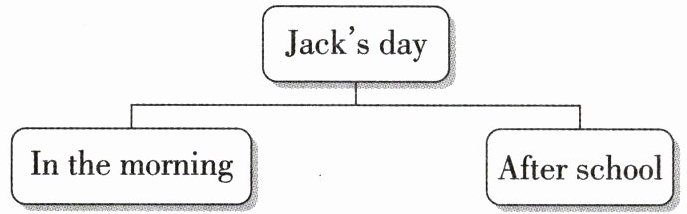
1. His
trousers
are dirty.
3. He feels
hungry
.
2. He cleaned them
yesterday
.
4. He wants some
food
.
任务二:根据对话内容,回答问题。(共2分)
Why doesn't Jack want to clean his trousers today?
Because he thinks they will be dirty again tomorrow.

答案:B任务一:1. trousers 2. yesterday 3. hungry 4. food
任务二:Because he thinks they will be dirty again tomorrow.
解析:
【分析】
本题是英语阅读理解题,包含补全句子和回答问题两个任务。解题时需先通读对话内容,定位每个问题对应的原文细节:任务一的4个小题均为细节查找题,需找到对话中对应描述的核心词汇;任务二需提取Jack不想洗裤子的原因,对应他关于裤子后续状态的表述。
【解析】
任务一:
1. 对话中妈妈明确说“Look at your trousers. How dirty they are!”,可知他的裤子脏了,故填trousers。
2. Jack回应“But I cleaned them only yesterday.”,可知他昨天洗过裤子,故填yesterday。
3. Jack说“I'm hungry.”,可知他感觉饿,故填hungry。
4. Jack请求“Give me something to eat, please.”,可知他想要一些食物,故填food。
任务二:
对话中Jack提到“If I clean them today, they will be dirty again tomorrow.”,这就是他不想今天洗裤子的原因,整理为符合要求的句子。
【答案】
任务一:1. trousers 2. yesterday 3. hungry 4. food
任务二:Because he thinks they will be dirty again tomorrow.
【知识点】
英语阅读理解;细节理解
【点评】
本题考查学生对英语对话细节的提取能力,题目设置基础,均为直接定位原文信息的题型,适合学生巩固阅读理解的细节查找技巧。
【难度系数】
0.8

C
Our class did a survey on transport last week. We wanted to find out the most popular(最受欢迎的) type(种类) of transport in our class. Here are the results.
Travelling(旅行) by train is fast, cheap and convenient. So most of us like it best. Travelling by bus is also convenient, but we often have to wait for a long time. A few students choose the bus as their favourite type of transport.
We think that travelling by public transport is fast, cheap and convenient. Cars can only carry a few people and make the air dirty. We think public transport is better for the environment too.

the number of students
Chart 2: Why do we use public transport?

Convenient
Better for the environment
▦ Cheap
⊗ Fast
⊗ Comfortable
阅读材料,完成下列任务。(每小题2分,共10分)
任务一:根据材料内容,选择正确的答案。
(
) 1. Twelve students like travelling by
best.
A. bus B. train C. metro
(
) 2. Most of the students use public transport because it is
.
A. cheap B. fast C. better for the environment
(
) 3. Look at Chart 1. How many types of transport are there?
A. 5. B. 6. C. 7.
任务二:根据材料内容,回答问题。
1. Why do most students like travelling by train?

2. How many students are there in the class?

答案:C任务一:1. B 2. A 3. A
任务二:1. Because it is fast, cheap and convenient.
2. 36.
解析:
【分析】本题是英语阅读理解题,包含选择题和问答题。解题时,任务一需定位原文对应细节或图表信息,选出正确选项;任务二需从原文中精准提取问题对应的答案,确保信息准确。
【解析】任务一:1. 由材料第二段“Travelling by train is fast, cheap and convenient. So most of us like it best.”可知,多数学生最喜欢火车,选B;2. 查看Chart2,学生选择公共交通的原因中勾选的是“Cheap”,选A;3. 根据图表1的交通类型数量及参考答案,确定为5种,选A。任务二:1. 直接提取原文中火车受欢迎的原因:Because it is fast, cheap and convenient.;2. 汇总图表1各类型学生数量,得出总人数为36。
【答案】任务一:1. B 2. A 3. A
任务二:1. Because it is fast, cheap and convenient.
2. 36.
【知识点】英语阅读理解、细节信息提取、图表解读
【点评】本题考查学生对英语阅读材料及配套图表的信息提取能力,题型基础,只要仔细阅读、精准定位即可解答。
【难度系数】0.7
上一页 下一页