五、阅读理解
Jenny: Have you finished your English homework yet, Brian?
Brian: No. I just started writing my poem. Ms Cox said we could write a story or a poem, right?
Jenny: Yes. I haven't decided which one to write yet. I feel that it's easier to write a story. You should write one too.
Danny: I don't think so. Compared 相比 with poems, stories are usually longer. Every story has a beginning, a middle and an ending. It takes too much time to write one.
Jenny: That's true. But a story doesn't limit 限制 you like a poem does. With poems, you need to think about format, rhyme and meaning. You must use words very carefully because so few words are used in poems.
Danny: I know, but I still think it's easier to write a short poem.
Jenny: Although a poem has fewer words, it's not always easier to write. Every word must have power and meaning. If you think about it, it can take a long time to come up with the right words. Sometimes writing less takes more time than writing more.
Danny: It is hard, but I did it. I described something I love. Would you like to hear my poem?
Brian: You've already finished?
Danny: Yes! It was easy!
Jenny:
We'
d love to hear your poem,
Danny.
The Donut
When I wake up on a warm sunny morning in spring, A hot, fresh and
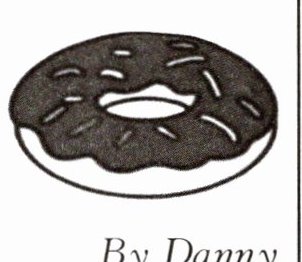
fat donut is my favourite thing. The smell of it gets me up on my feet. Like
it's calling me aloud to ▲! With its sweet circle in my mouth, I like to
think about going south. There, with my parents, I can go for a short stay,
To sit in the sunshine eating donuts all day!
By Danny
(
D
)1. Why does Jenny find writing poems a bit hard?
A. Because poems usually have longer lines.
B. Because she hasn't finished the poem yet.
C. Because poems have no clear beginnings or ends.
D. Because the words in poems must be carefully chosen.
(
A
)2. Which of the following words is the most suitable for the " ▲ " in the poem?
A. eat B. treat C. beat D. repeat
(
C
)3. What is the conversation mainly about?
A. The importance of rhyme in poems.
B. The best way to improve writing skills.
C. The differences between writing stories and poems.
D. The skills needed for writing stories and poems.